


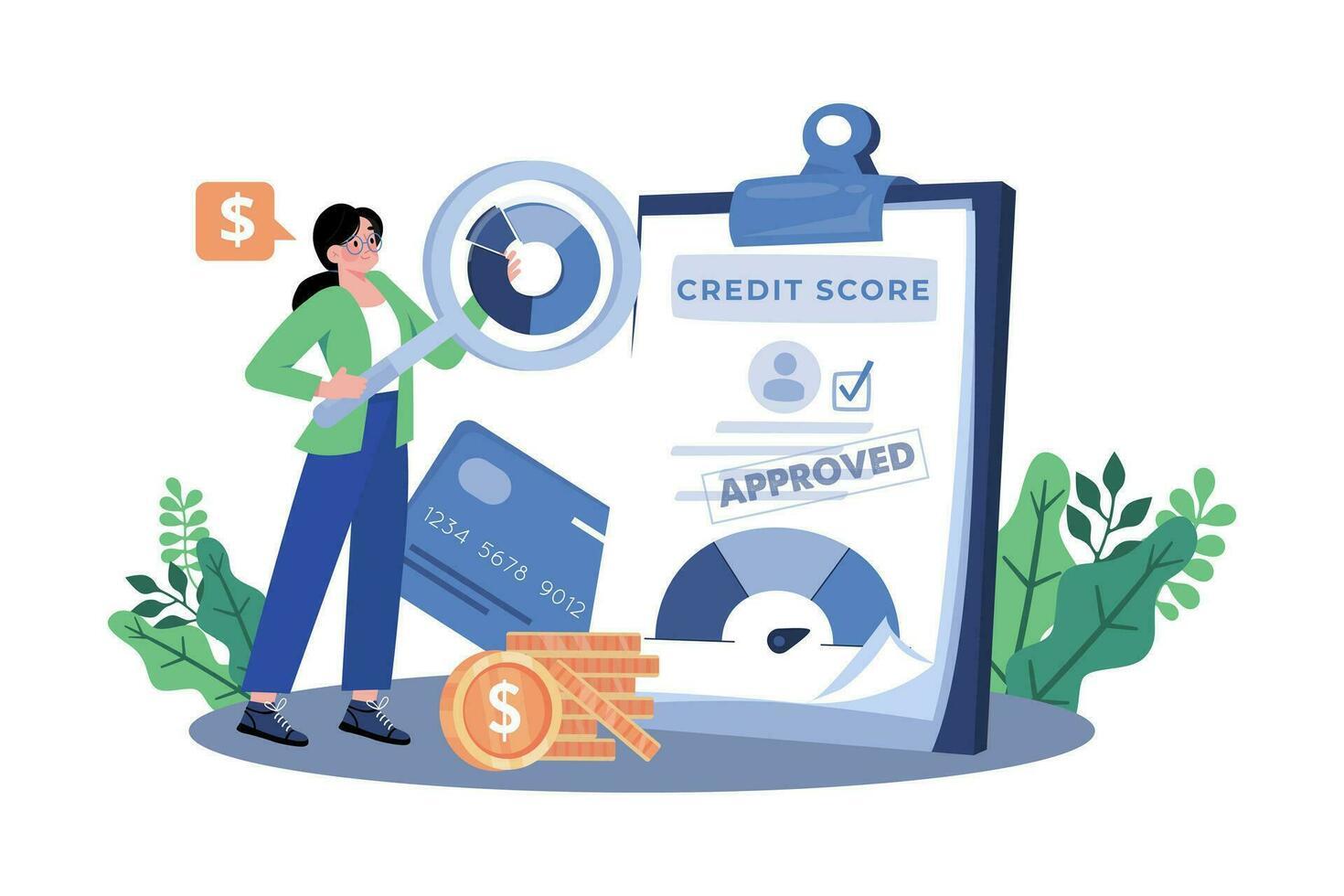
If you spend five minutes scrolling through finance job boards, you will likely encounter a "wall of acronyms." For someone looking to break into or advance within the field of credit risk, the question isn’t just about what you know, but how you prove it. In the high-stakes world of commercial lending and risk management, certifications act as a universal language—a shorthand that tells recruiters you have the stamina and technical depth to handle millions (or billions) of dollars in exposure.
However, these certifications are not created equal. They require hundreds of hours of study and significant financial investment. Before you sacrifice your weekends, you need to know: which one actually moves the needle for a credit risk career?
1. The Heavyweight: CFA (Chartered Financial Analyst)
The CFA is often called the "gold standard" of finance, and for good reason. It is a grueling, three-level marathon covering everything from ethics and quantitative methods to derivatives and alternative investments.
Is it worth it for Credit Risk?
· The Pros: It provides immense prestige and a deep understanding of corporate financial statements. If you are looking to work in High-Yield Credit, Investment Grade Research, or Fixed Income Analysis, the CFA is almost a prerequisite. It teaches you to look at a company from the perspective of an investor.
· The Cons: Much of the curriculum (equity valuation, portfolio management) is irrelevant to the day-to-day work of a commercial credit underwriter. You spend a lot of time learning how to pick stocks, which is the opposite of the "capital preservation" mindset needed in risk.
· The Verdict: Get the CFA if you want to work on the "Buy-Side" (asset management) or in a major investment bank's research department.
2. The Specialist: FRM (Financial Risk Manager)
The FRM, offered by the Global Association of Risk Professionals (GARP), is the most direct rival to the CFA for those specifically in the risk space. It focuses exclusively on the "science" of risk across market, credit, operational, and investment domains.
Is it worth it for Credit Risk?
· The Pros: It dives deep into Credit Risk Measurement. You will learn the mathematics behind Probability of Default (PD), Loss Given Default (LGD), and the Basel regulatory frameworks. It is highly valued in "Middle Office" risk roles and by regulatory bodies.
· The Cons: It is highly quantitative. If you aren't comfortable with statistics and complex modeling, it can be a steep climb. It is less focused on "qualitative" credit—like reading a borrower's character or local industry trends.
· The Verdict: Get the FRM if you want to be a Risk Manager at a bank or work in regulatory compliance and quantitative modeling.
3. The Technical Peer: PRM (Professional Risk Manager)
The PRM, offered by PRMIA, is the main competitor to the FRM. While perhaps slightly less "famous" globally in terms of sheer applicant numbers, it is highly respected for its rigorous mathematical approach and its modular exam structure.
Is it worth it for Credit Risk?
· The Pros: The modular format allows you to take exams at your own pace, which is great for working professionals. It focuses heavily on the theory of risk and financial mathematics.
· The Cons: In certain geographic markets (like parts of Asia and India), the FRM carries more brand recognition with HR departments.
· The Verdict: Consider the PRM if you prefer a modular study approach and want to work in institutional risk management or insurance.
4. The "Missing Link": Theory vs. Practicality
Here is the dirty secret of the finance industry: You can pass Level 1 of the CFA and still have no idea how to "spread" a real-world, messy financial statement for a local manufacturing company.
The certifications mentioned above are academic and theoretical. They tell an employer you are smart, but they don't necessarily prove you are productive on day one. Most senior credit managers complain that fresh charterholders know how to calculate Black-Scholes but don't know how to spot a "window-dressed" transaction in a borrower's bank statement.
This is why many professionals choose to supplement (or start) their journey with a more vocational, hands-on program. A specialized Credit Risk Analyst Training Course focuses on the actual job:
· Writing Credit Memos that get approved.
· Performing Covenant Testing on active loans.
· Using actual banking software and Excel templates.
· Understanding local lending laws and industry-specific nuances.
5. Strategy: How to Choose Your Path
How you build your "Roadmap" depends entirely on your current career stage and your ultimate goal.
| Career Goal | Recommended Path |
| New Entry (Student/Fresher) | Practical Training Course $\rightarrow$ Entry Level Job $\rightarrow$ FRM Level 1 |
| Corporate Lender / Underwriter | Practical Training Course $\rightarrow$ CFA (if looking at High Yield) |
| Quantitative Risk Manager | FRM or PRM $\rightarrow$ Master's in Financial Engineering |
| Chief Risk Officer (CRO) | Experience $\rightarrow$ FRM $\rightarrow$ Executive MBA |
Scenario: The Pivot Professional
If you are moving from Accounting or Operations into Risk, the FRM is your best bet for a long-term credential. However, to pass the interview, you’ll need the practical skills found in a Credit Risk Analyst Training Course to show you can actually handle the workload of an analyst.
6. The "Hidden" Value: Networking and ROI
Beyond the letters after your name, these certifications provide access to a community. Whether it's the local CFA Society or the GARP networking events, these are where the "hidden" jobs are discussed.
However, always calculate your Return on Investment (ROI). A CFA can take 3-4 years to complete. If your goal is to get a job in the next 6 months, a localized, industry-aligned training program will give you a much faster return than a global exam that only happens twice a year.
Conclusion: Is it worth it?
Is a certification worth it? Yes—but only if it matches your destination. * If you want to be a Portfolio Manager, go CFA.
· If you want to be a Quant/Risk Architect, go FRM.
· If you want to be a Credit Underwriter or Commercial Lender, start with a Credit Risk Analyst Training Course to get the job, then layer on an FRM later to solidify your standing.
In the end, a certification gets you the interview, but your technical ability to "spread the numbers" and defend your risk appetite is what gets you the job. Don't just collect acronyms—collect skills.

 Arabic
 French
 Spanish
 Portuguese
 Deutsch
 Turkish
 Dutch
Dutch
 Italiano
 Russian
 Romaian
 Portuguese (Brazil)
 Tiếng Việt