


So, you’ve finally decided to pull the trigger on a trip to India.
You’ve probably seen the photos. The Taj Mahal at sunrise. The pink walls of Jaipur. The chaotic, beautiful energy of Old Delhi. These three cities make up the "Golden Triangle," and for most first-time travelers, they are the non-negotiable starting point.
But here is the thing. If you only stick to the cities, you’re missing a massive piece of the puzzle. India isn't just about marble palaces and rickshaw rides. It’s about the raw, heart-pounding silence of the jungle.
That’s where Ranthambore comes in. By adding a few days in the wild to your itinerary, you turn a standard sightseeing trip into an actual adventure. Here is why this combination is the smartest way to see the country.
Why Is the Mix of History and Wildlife So Addictive?
If you spend seven days straight looking at forts and temples, something happens. It’s called "fort fatigue."
After the fifth royal courtyard, they all start to look the same. Your brain gets saturated with dates, dynasties, and architecture. You find yourself scrolling through your phone at a UNESCO World Heritage site because you’ve seen "enough" red sandstone for one lifetime.
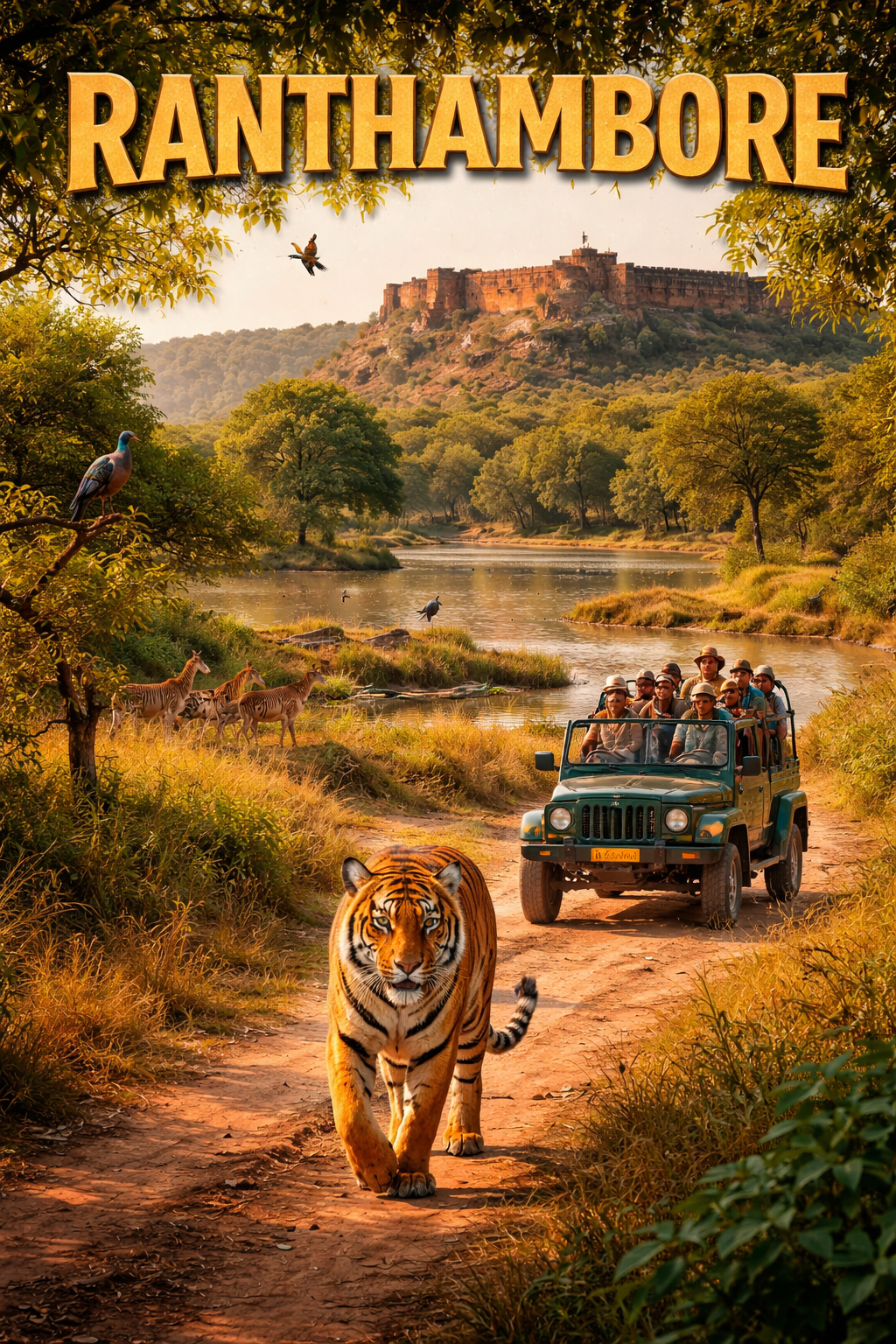
Ranthambore is the perfect circuit breaker. Just as you’re starting to feel overwhelmed by the heat and noise of the cities, you’re suddenly in an open top jeep. The air is cooler. The only sound is the alarm call of a spotted deer.
This contrast keeps your trip fresh. You go from the high energy markets of Delhi to the quiet suspense of tracking a tiger. It’s a total sensory reset.
Can You Really See a Tiger in the Wild?
Ranthambore is famous for a reason. It is one of the best places in the world to see Bengal tigers in their natural habitat.
Unlike other dense jungles where the cats stay hidden in the thick undergrowth, Ranthambore’s terrain is dry and rocky. The tigers here are legendary. They are used to the jeeps. They don’t just run away; they walk across the tracks like they own the place. Because they do.
Seeing a tiger isn't like going to a zoo. There are no guarantees. You have to work for it. You listen for the monkeys screaming in the trees. You look for fresh pugmarks in the dust. When that flash of orange finally appears through the grass, the adrenaline hit is unlike anything you’ll experience at a monument.
Is the Logistics of Adding Ranthambore Too Complicated?
You might think adding a national park to a city-hop trip sounds like a nightmare. You’re already worried about navigating Indian railway stations or figuring out which taxi driver isn't trying to take you to his cousin’s carpet shop.
Actually, Ranthambore is incredibly easy to slot in. It sits right between Agra and Jaipur.
-
The Train Option: You can catch a fast train from Agra to Sawai Madhopur (the gateway to the park). It takes about three hours.
-
The Road Option: It’s a manageable drive through rural Rajasthan. You get to see the real countryside farmers in bright turbans, mustard fields, and small-town life that you’d miss if you just flew between the big hubs.
By making it a four-stop loop, you aren't backtracking. You’re just taking a scenic detour through the wild.
How Do You Survive the Chaos of the Cities First?
Delhi, Agra, and Jaipur are intense. There is no other word for it.
You’ll get lost in the spice markets of Chandni Chowk. You’ll probably have a confusing conversation with a guy who insists he’s your long-lost best friend. You’ll definitely eat something so spicy your ears ring.
This intensity is part of the charm, but it can be draining. Having Ranthambore at the end of your "Triangle" acts as a reward. It’s the place where you can finally put the camera down (or switch to a long lens) and just breathe.
Most of the lodges near the park are stunning. You can spend your afternoons by a pool, watching kingfishers fly past, far away from the honking horns of the city.
What Should You Pack for This Kind of Hybrid Trip?
Packing for India is a balancing act. You need to be respectful in temples but practical in the jungle.
-
For the Cities: Loose, breathable cotton. Keep your shoulders and knees covered. A light scarf is a lifesaver for dusty rickshaw rides.
-
For the Safari: It gets surprisingly cold in the morning. Even in the desert, a 6:00 AM safari in an open jeep feels like a walk through a freezer. Bring a light down jacket or a windbreaker.
-
Colors Matter: In the jungle, leave the bright neon clothes at the hotel. Stick to tans, olives, and browns. You want to see the animals, not scare them away by looking like a giant highlighter.
Why Is Professional Planning Better for This Route?
You can try to book everything yourself. But between the government safari booking portals that sometimes reject international cards and the "hidden" fees for park entries, it can become a full-time job.
If you’re traveling solo or for the first time, you don’t want to spend your holiday troubleshooting your itinerary. You want to be looking at tigers.
This is why many experienced travelers opt for a structured golden triangle tour with ranthambore. It takes the guesswork out of the equation. You get a private driver who knows exactly where the cleanest restrooms are on the highway and a guide who can explain the history of the Amber Fort without boring you to tears.
More importantly, it ensures you actually get a seat on a safari jeep. During peak season (November to March), slots vanish weeks in advance. A pre-planned trip means your permit is already waiting for you at the gate.
How Do You Know if This Is the Right Trip for You?
If you just want to tick boxes off a list, stick to the standard three city hop. It’s fast, it’s iconic, and you’ll get the photos.
But if you want to feel the scale of India the ancient stones, the spicy street food, and the untamed wild then you need the extra stop. Choosing a golden triangle tour with ranthambore gives you a much more honest look at the country. It shows you the palaces of the kings and the kingdoms of the animals.
When people look back on their golden triangle holidays, they rarely talk about the hotel room or the bus ride. They talk about the moment they saw the Taj Mahal through the morning mist, and the moment they saw a tiger disappear into the shadows of an ancient banyan tree.
Don't settle for half the story. See the whole thing.

 English
 Arabic
 French
 Spanish
 Portuguese
 Turkish
 Dutch
Dutch
 Italiano
 Russian
 Romaian
 Portuguese (Brazil)
 Tiếng Việt